

Prevention:
mental health during pregnancy and in the Early Postnatal Period
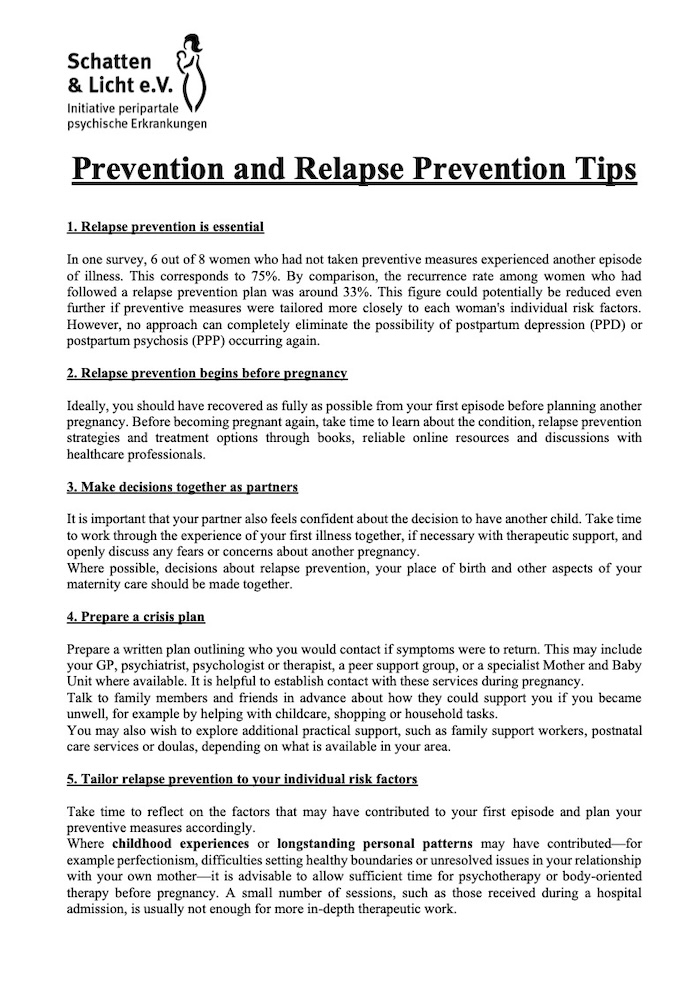
As a general rule, women who have experienced depressive episodes at any point in their lives, or who
have previously gone through postpartum depression or postpartum psychosis, are at increased risk of
developing postnatal mental health problems. In such cases, preventive measures should be actively
pursued.
Prevention primarily includes informing the attending gynecologists and midwives in advance, as
well as ensuring early access to psychological support. The same approach applies to women who
experience depression during pregnancy; their mental health should be closely monitored throughout.
From a preventive perspective, practical considerations regarding life after childbirth play an
important and often underestimated role. This includes avoiding major life changes (such as moving
house), planning the day-to-day routine with a newborn, organising support systems, and identifying
suitable childcare options. Family members, friends, postpartum care providers, and/or household help
should be prepared and involved early on.
Choosing a home birth or delivery in a birthing centre may also help reduce risk, as such settings are
often experienced as more self-determined. In addition, when selecting a gynecologist and midwife, care
should be taken to ensure that they provide positive, supportive care, do not create unnecessary
anxiety, and are available for extended consultations and home visits after the birth.
Strict rest following delivery and during the first weeks postpartum can further help reduce the risk of
illness. This includes limiting visitors and ensuring adequate nighttime sleep—for example, by arranging
for nighttime care of the baby by hospital staff or family members.
With regard to the sharp hormonal drop following childbirth, a number of preventive strategies are available.
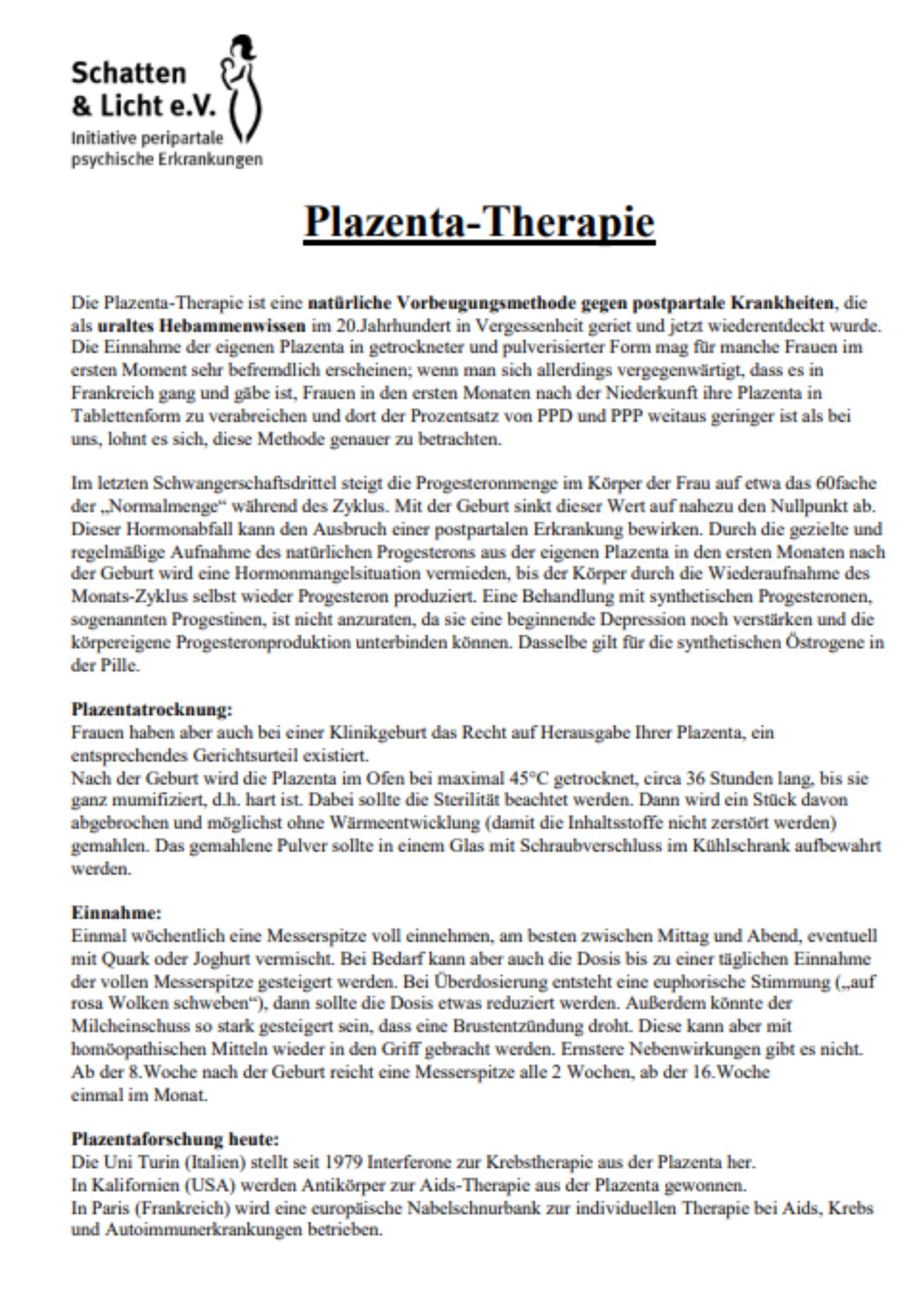
Placenta-Based Prophylaxis
The most natural form of prophylaxis—well known to traditional midwifery practices—is placenta-based. In
this approach, the placenta is dried at a temperature not exceeding 45°C for approximately 36 hours after
delivery, then ground into a powder and taken as needed. It should be stored in a dry place and never
exposed to excessive heat. Homeopathic preparations can also be made from the placenta.
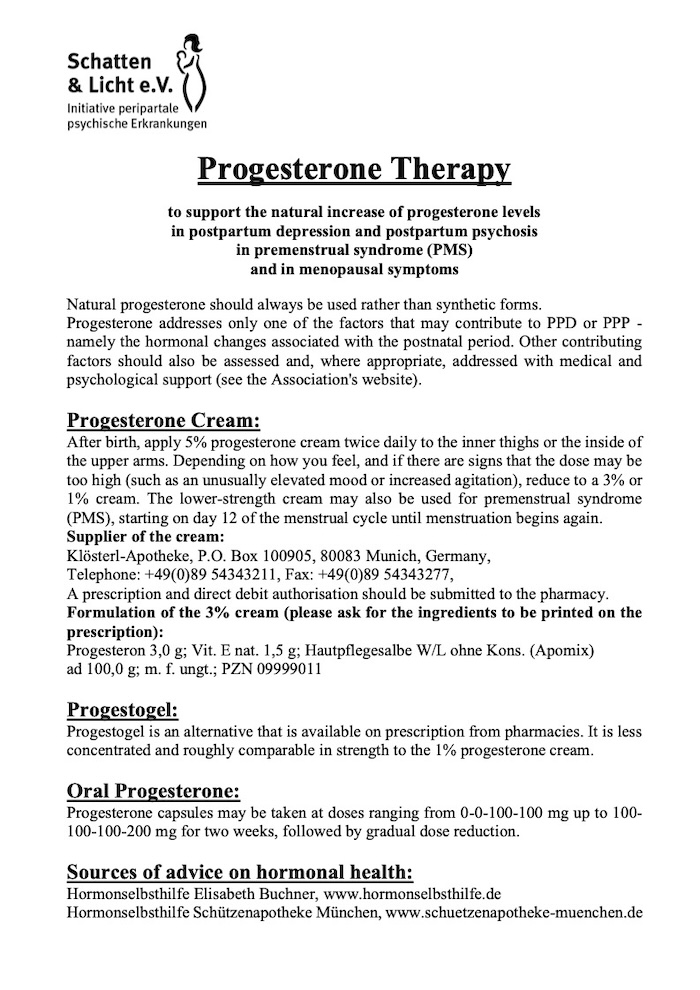
Progesterone Prophylaxis
Another preventive option is treatment with natural progesterone in the form of a cream. This treatment
should begin immediately after delivery.